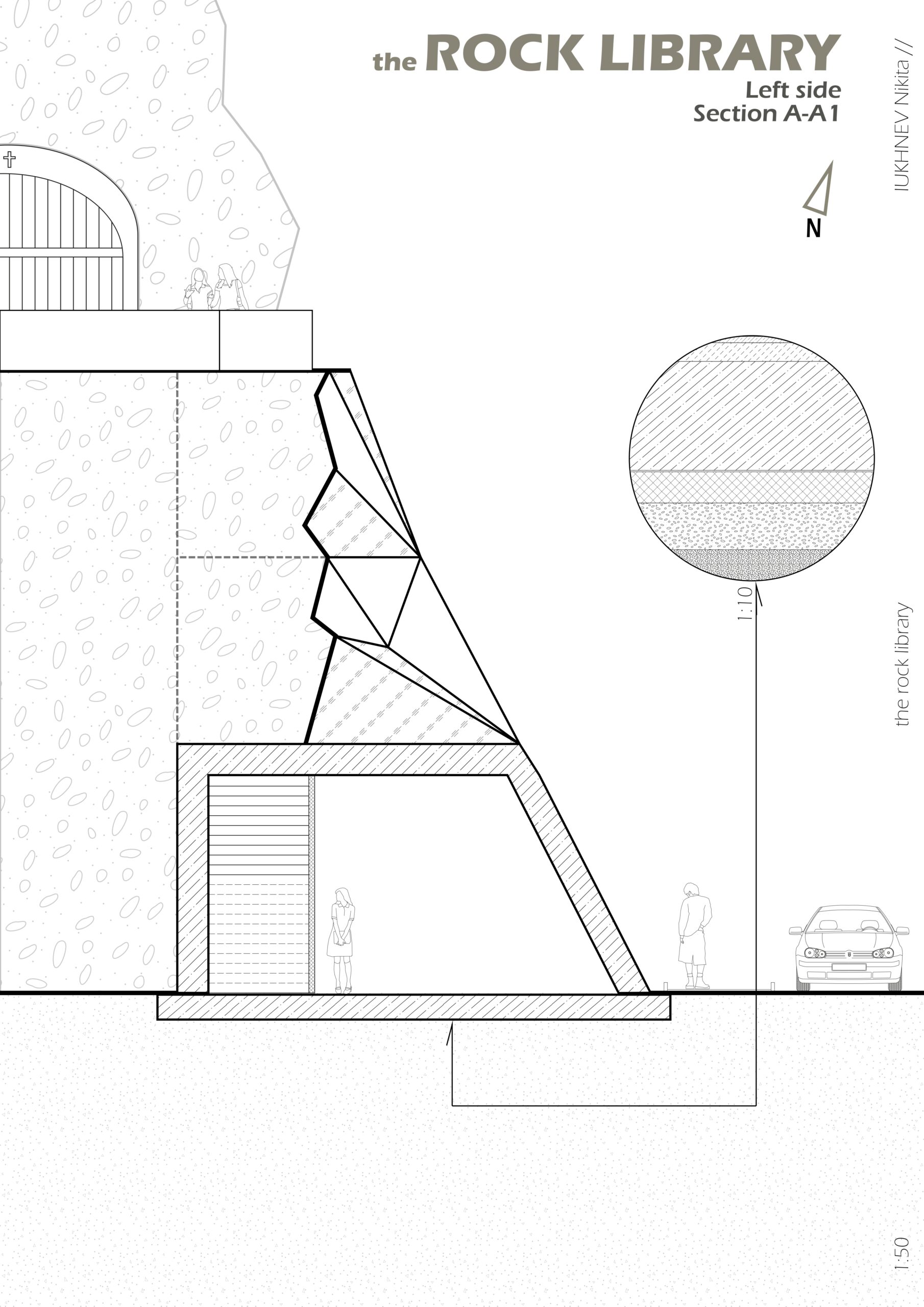
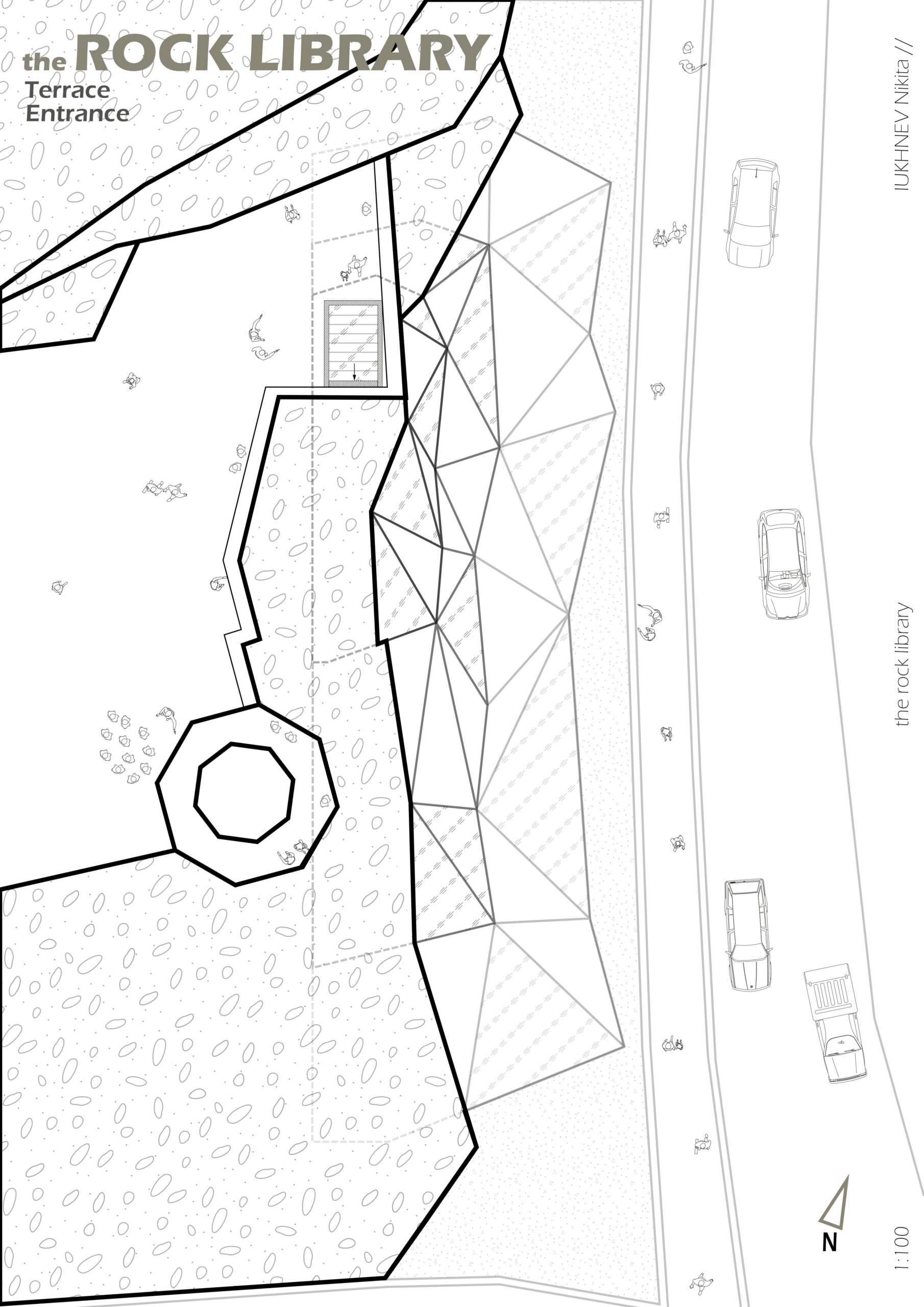
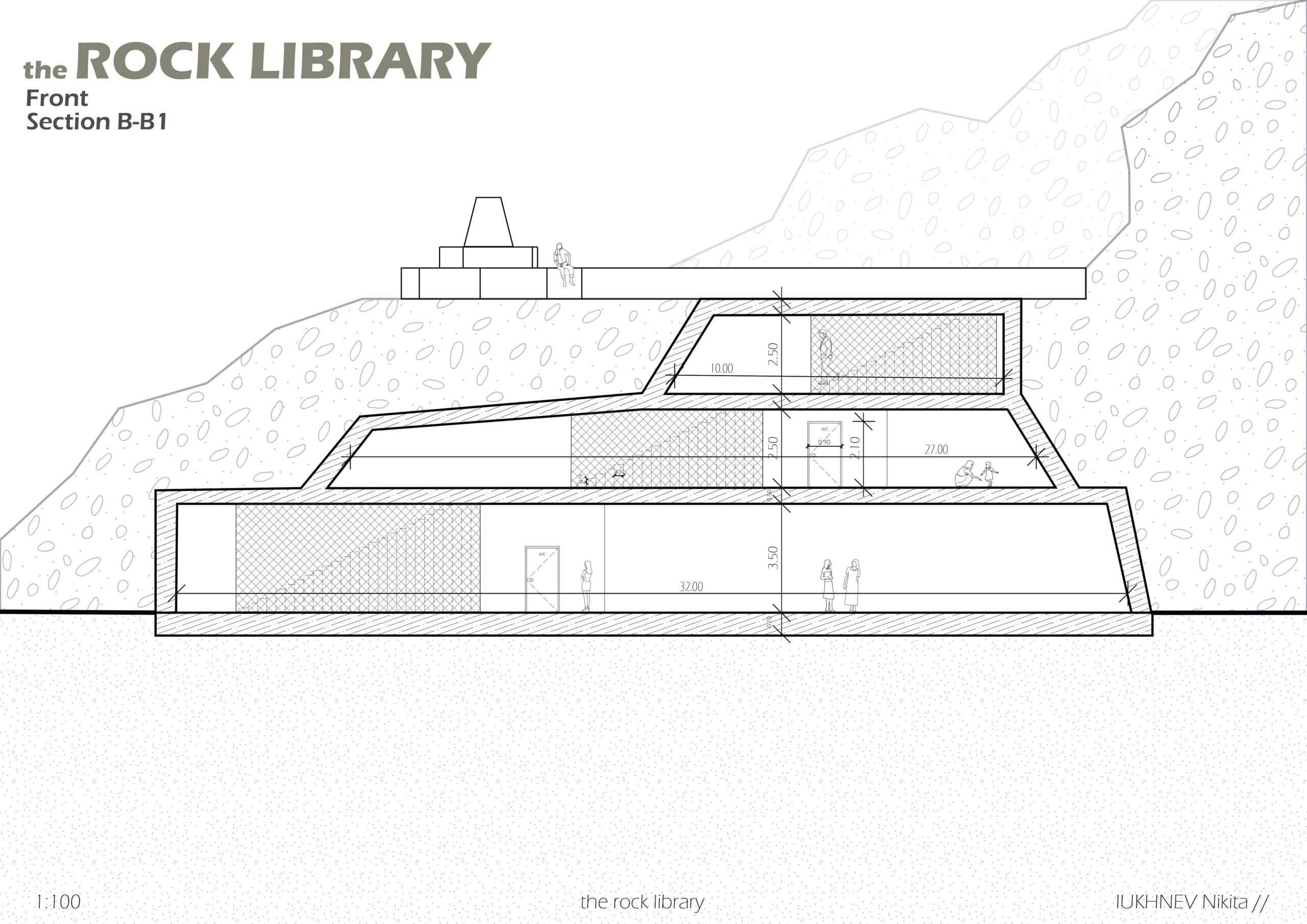
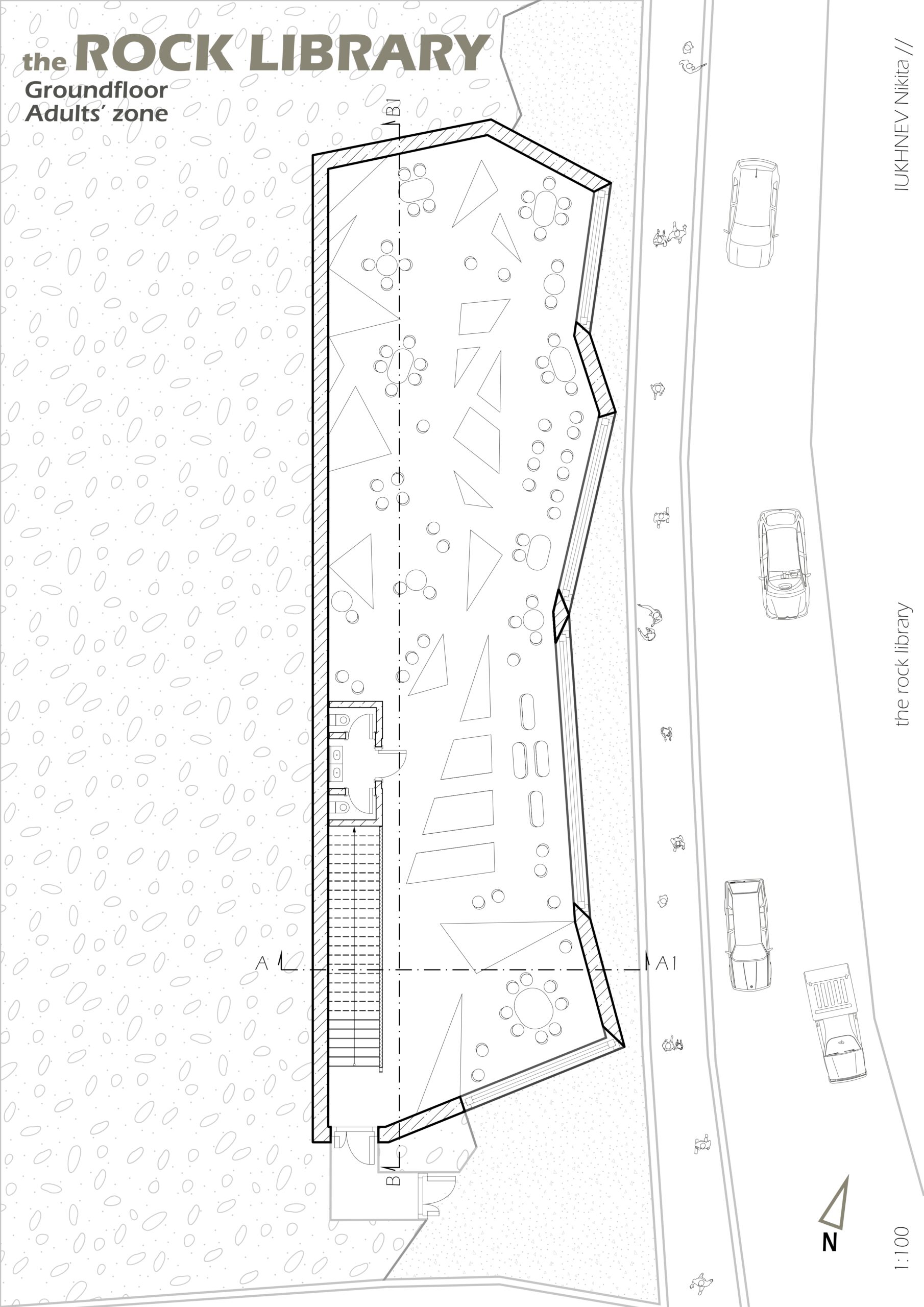
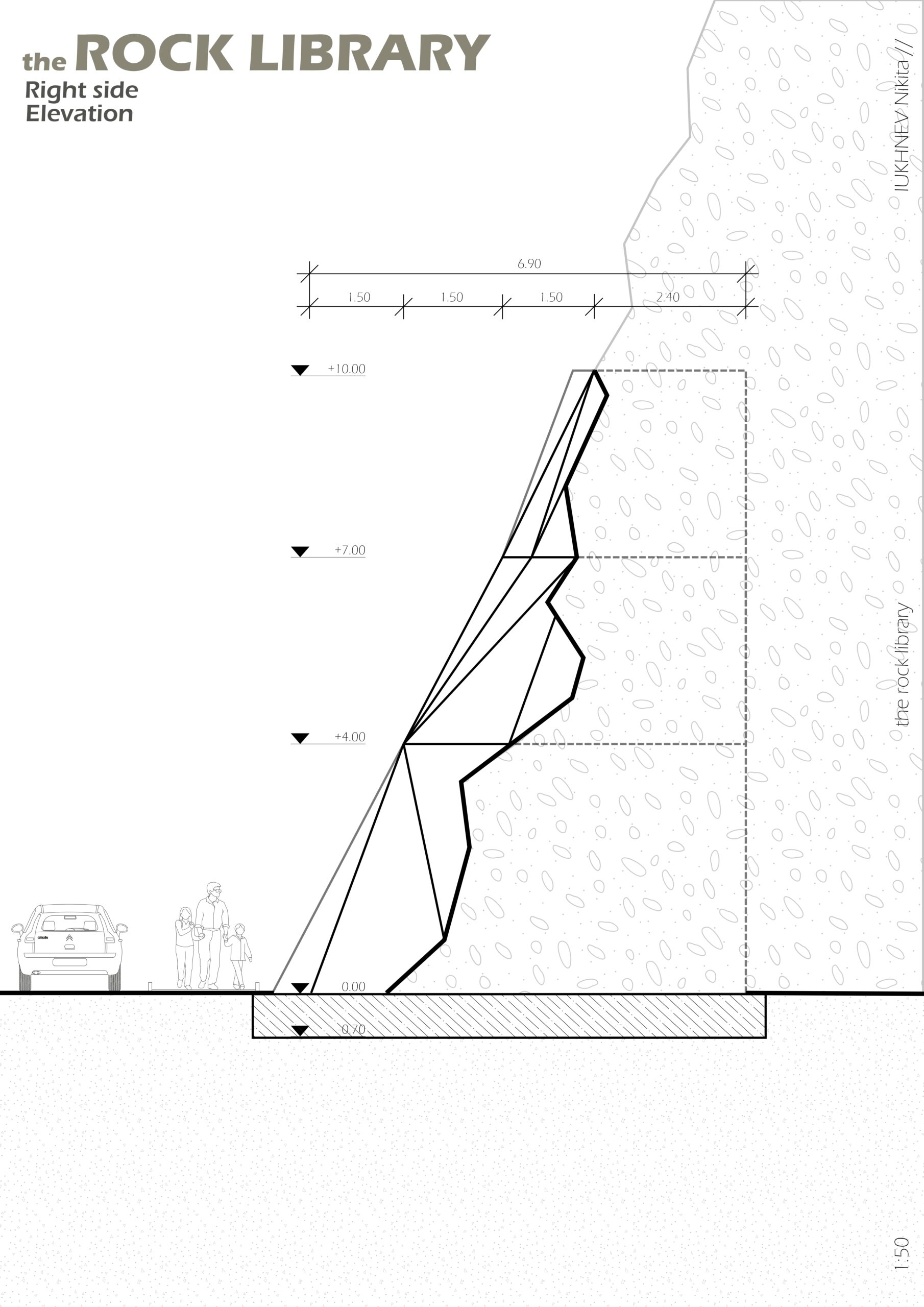
The project began with a simple observation: despite Gellért Hill being one of Budapest’s most visited landmarks, it offers surprisingly few places where people can pause, read, and experience the landscape. Instead of placing another object on the hill, the proposal carves architecture into it, allowing the library to become a continuation of the natural rock rather than a competing landmark. Designed as a compact public library and reading pavilion, the project responds to the site’s history, topography and constant pedestrian movement. Visitors enter from the upper level and gradually descend through the building, making reading part of a journey through the hillside. The concept transforms an overlooked passage into a destination that connects nature, culture and everyday life. By creating spaces for learning, reflection, and community, the project demonstrates how architecture can strengthen public space while respecting the identity of one of Budapest’s most iconic landscapes.