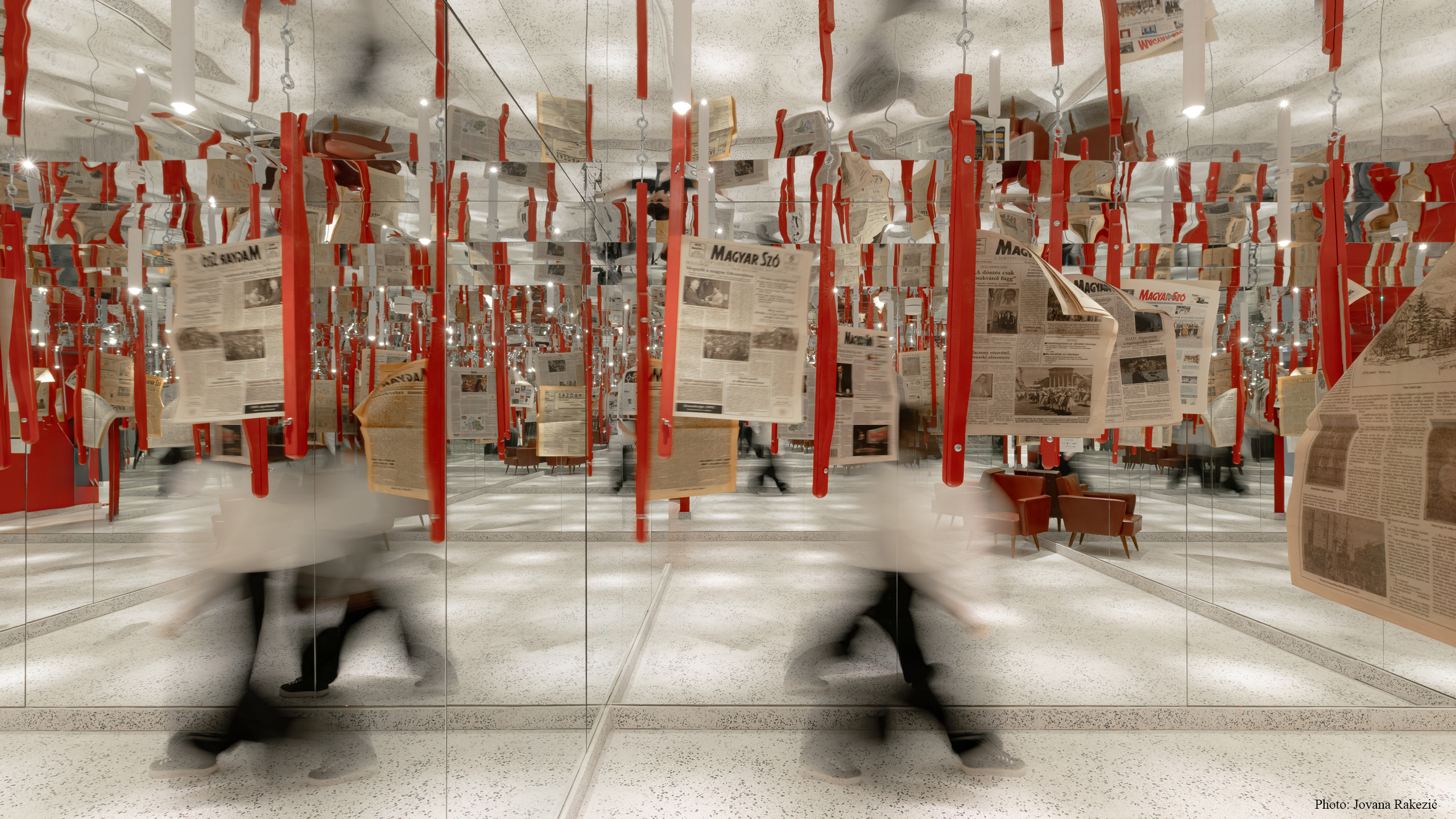
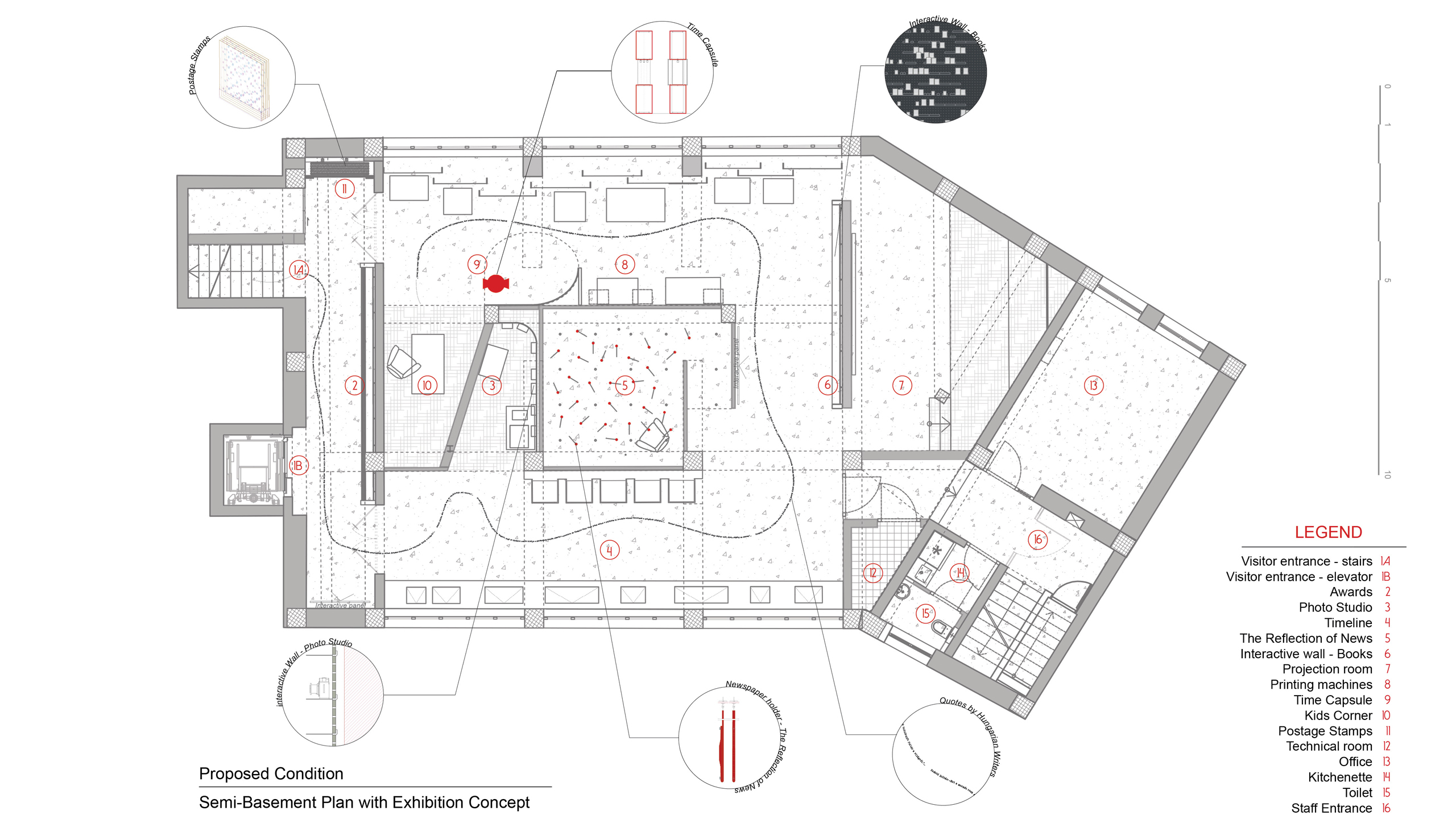
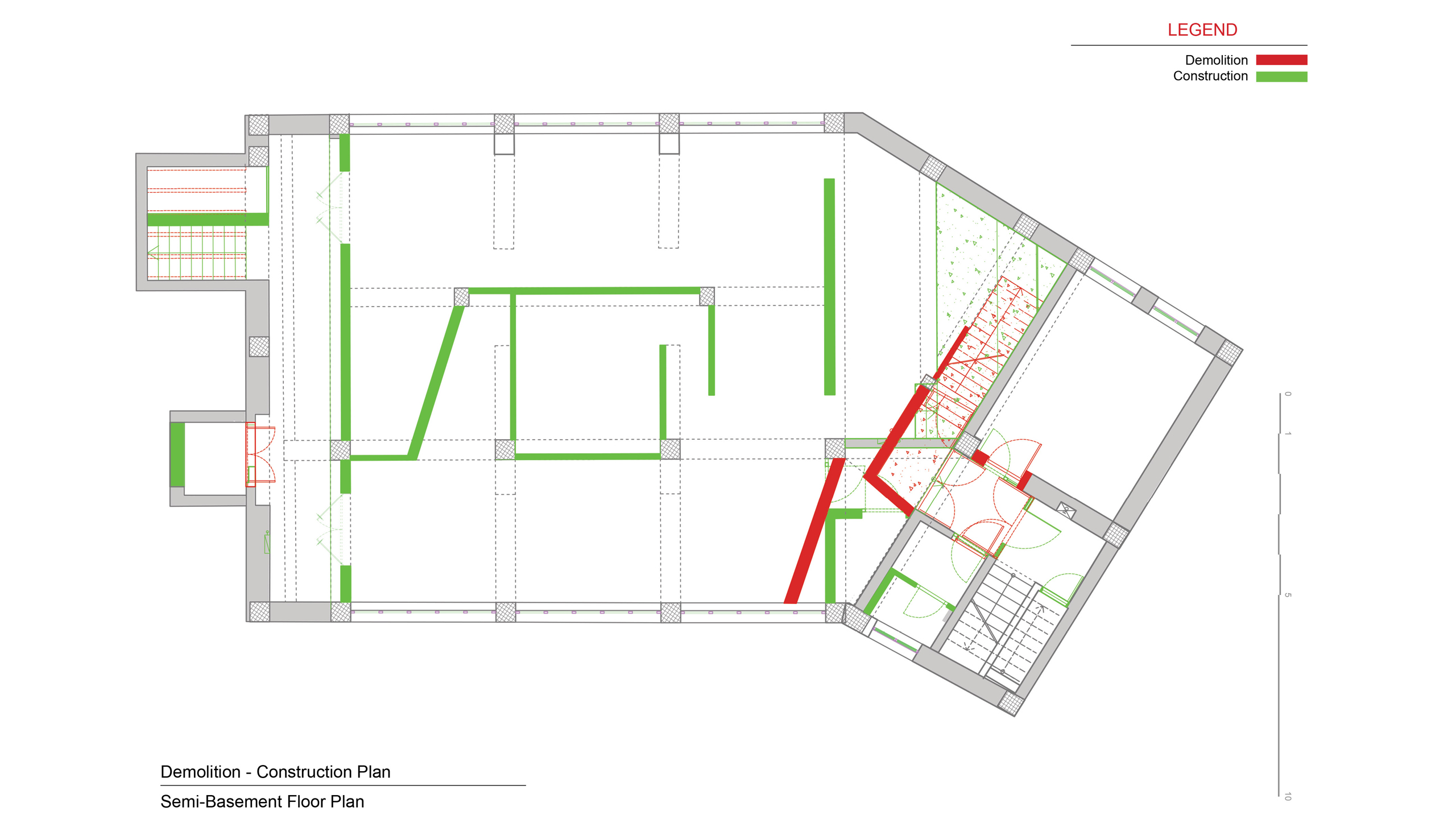
The project originates from the reinterpretation of the former printing facility of one of the earliest post-war newspaper houses in former Yugoslavia, designed by Pavle Žilnik (1955–1957). The intervention re-establishes the link between the buildings original function, and new cultural program. The design team developed the architectural intervention, curatorial narrative, exhibition concept, and visitor experience as a single continuous process. The client provided only archival photographs of intended exhibits, used as reference material rather than a fixed programmatic brief, allowing the entire spatial and exhibition system to be fully defined by the design team. The museum is structured as a continuous spatial sequence following the production of Magyar Szó, from editorial processes to final newspaper production. Spatial transitions, transparency, and reflection construct a unified narrative field in which movement becomes the primary mode of reading the institution.